
First, decide whether the property is secure
If an external door will not lock, make that the first thing you explain when seeking help. A door that will not secure needs a different visit discussion from one that is becoming stiff but still operates normally. Say whether you are inside, outside or able to use another entrance. An online message is not a confirmed attendance arrangement.
Stop if the handle or key needs extra force. Repeatedly pulling the door into place or pushing harder on the key can turn an intermittent problem into a complete failure. Do not close an open door just to reproduce a fault if you are unsure that it will reopen. Keep people clear of an unsecured entrance while you arrange assistance.
Describe the handle and the key separately
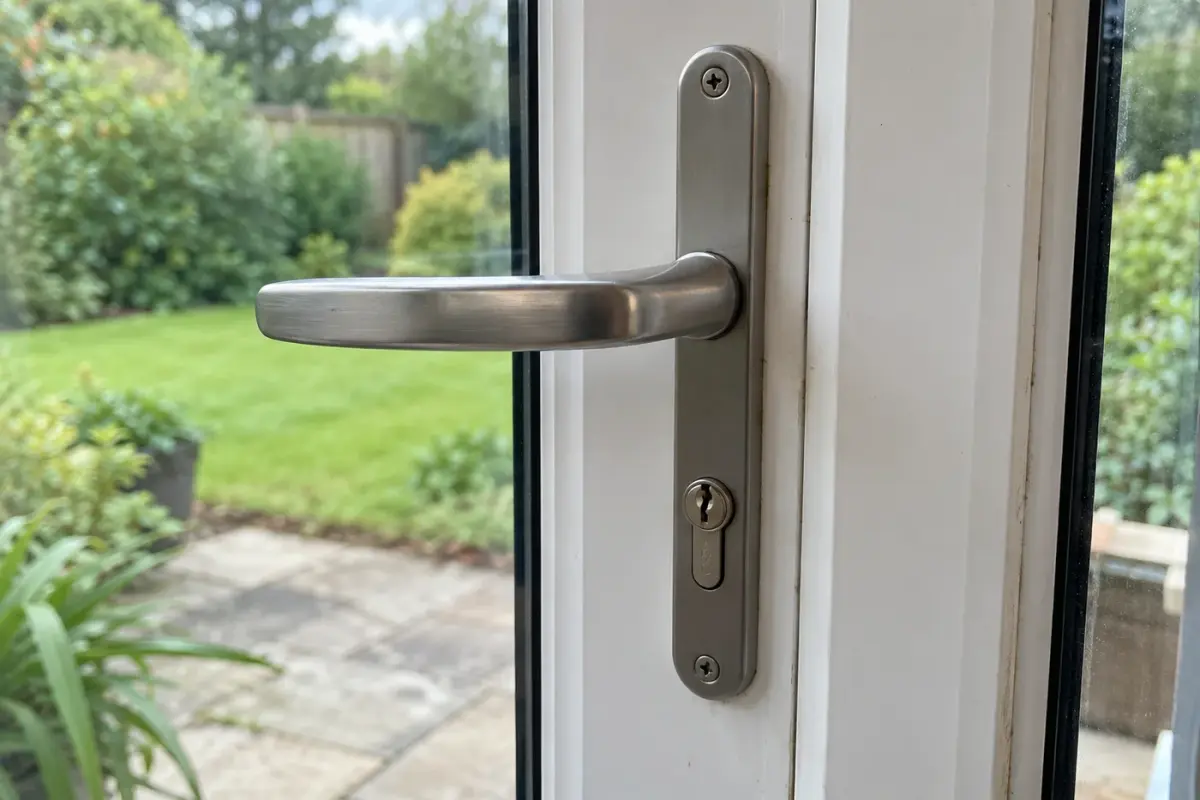
A uPVC entrance commonly combines handles, a key cylinder and a multipoint mechanism running along the edge of the door. A problem at one part can feel like a problem at another. A handle that will not lift, a key that will not turn and a key that turns without moving the mechanism are useful separate observations.
If you already know the lock operates with the door open but resists when it is closed, report that detail. It can point the assessment towards the relationship between the door and frame, but it does not establish a diagnosis. Similarly, a loose handle does not prove that only a handle needs replacing.
- Does the handle move normally, feel unusually loose or stop part-way?
- Does the key enter fully, turn partially or turn without the expected result?
- Has the door started catching, dropping or needing to be pulled into position?
- Did the problem develop gradually or follow a sudden event?
Why a new cylinder may not solve the problem
The cylinder is the part into which the key fits. It is not the complete locking system. If the difficulty involves door alignment, frame keeps or a failed internal mechanism, replacing an otherwise serviceable cylinder may leave the original fault in place. Conversely, a damaged cylinder may need replacement even when the handles feel normal.
Ask for an explanation of the affected component before agreeing to parts. A useful assessment connects the proposed work to your actual symptom. If several components are involved, ask which work restores normal operation and which is an optional security upgrade. Those are separate decisions and can be priced separately.
Prepare a useful repair enquiry
Give the full postcode, door material, current access situation and a short account of the fault. Mention any previous adjustment or replacement, if known. If the locksmith requests photographs, a clear overall view of the door and a close view of the relevant hardware may help; avoid including documents, keys with readable codes or unrelated personal details.
Explain whether the entrance serves a house, flat or business. For a shared entrance, tell the person arranging the visit who manages it. Agree how any diagnostic attendance, parts and additional work will be charged. A photograph or phone conversation can narrow the questions, but compatible parts and the condition of the door still need checking.
After the work, check everyday operation
Before the visit ends, ask to be shown the correct locking sequence for your particular mechanism. Try the supplied keys and handle yourself with the locksmith present. Confirm what has been repaired or replaced, keep the invoice and follow the maintenance instructions for the fitted product. Different cylinders have different lubrication requirements, so avoid treating a general household spray as a universal solution.
Need help with your door?
Call 07337 571126, open 24/7, to talk through the fault and attendance availability for your address.
Explore the relevant serviceFurther reading & sources
Product suitability depends on your door and existing hardware. Follow the instructions for the actual product fitted to your property.