
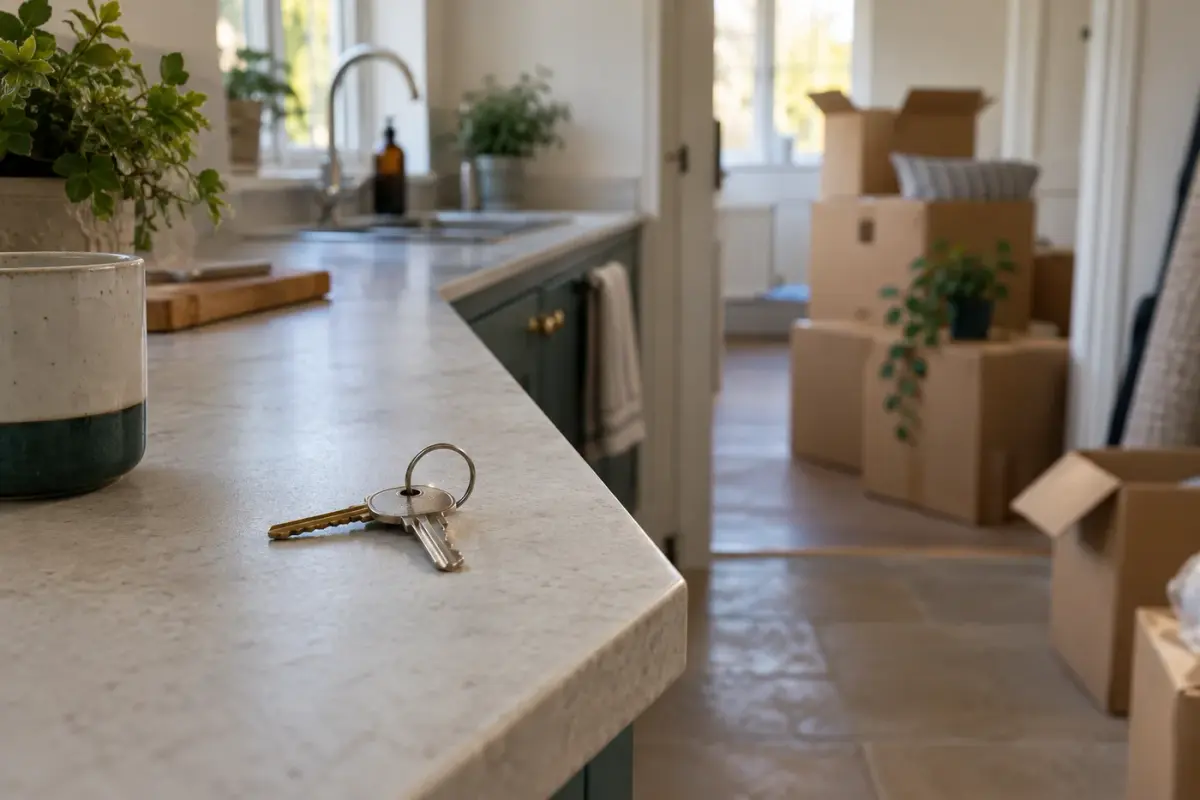
Make access part of the move plan
A handover usually tells you which keys have been passed to you, not who may hold other copies. Previous occupants, relatives or contractors may have had keys at some point. Considering a lock or cylinder change gives you a practical opportunity to start a new key record rather than trying to reconstruct the entire history of the property.
Arrange the work around the point when you are authorised to access the home. A suggested moving date is not the same as a confirmed appointment, particularly if the handover timing can change. Explain that uncertainty when asking about availability and agree how you will confirm access before a locksmith travels.
Walk through every external entrance
Start with a simple door-by-door list. The front door may be the obvious priority, but a rear entrance, side door or connecting garage door may also use keys you cannot account for. Note which keys operate each entrance and whether any lock is stiff, loose or difficult to use. Avoid testing an unfamiliar lock in a way that could leave you outside.
Do not treat every lock as the same product. A timber door with a nightlatch and mortice lock has different hardware from a uPVC door with a cylinder and multipoint mechanism. A clear inventory helps the locksmith discuss suitable options for each entrance rather than pricing an undefined request to change everything.
- List the external doors you are responsible for and their door materials.
- Match the handed-over keys to their entrances and note missing keys.
- Record faults separately from the wish to start with new keys.
- Mention any shared entrance or managed door before arranging alterations.
Discuss the smallest suitable replacement scope
Changing access does not automatically require a new door or a complete new locking system. On some suitable doors, a cylinder replacement can provide a new key combination while retaining serviceable hardware. Other designs or faults need different work. Ask which component is being changed and whether the remaining mechanism is operating correctly.
This is also a useful time to discuss the product specification and the needs of the people using the entrance. Do not select a lock purely from its appearance or packaging. Compatibility, correct fitting and the operation of the complete door matter. If your insurance policy sets a particular requirement, check its exact wording before choosing a replacement.
Plan the appointment and the key handover
Tell the locksmith how many doors need attention, when access is expected and who will be present to approve the work. Ask for the proposed parts, labour and supplied keys to be identified in the quote. If several people need keys immediately, raise that early rather than assuming extra copies are included or available on the day.
For a flat or managed property, establish which doors you are entitled to alter and who handles communal access arrangements. Keep that conversation separate from the condition of your own entrance. A shared building system may need the managing agent or its existing specialist to be involved.
Start a simple new key record
After fitting, try each new key and ask for a demonstration of the correct locking sequence. Put old keys aside clearly so they are not confused with the new set. Decide who receives a spare, keep a private record of those handovers and store product details with the invoice. Avoid attaching the property address to a key ring. A short, current record is easier to maintain than relying on memory.
Need help with your door?
Call 07337 571126, open 24/7, to talk through the fault and attendance availability for your address.
Explore the relevant serviceFurther reading & sources
- Yale: changing locks and cylinders when moving home
- MLA: lock replacement and changing locks
- Yale: types of door locks
Product suitability depends on your door and existing hardware. Follow the instructions for the actual product fitted to your property.